Width is destiny.
The same 60 miles costs three times more the day your home becomes an oversize load. Permits, escorts, travel windows, setup crews: everything follows the tape measure. So that's where an honest quote starts.
The 2-minute quote requestA real person reads and answers every request
- 1Width: legal load, or permits and escorts
- 2Route: miles, states crossed, clearances
- 3Set: blocking, anchors, reconnects, inspection
Three numbers set the price. Width is the one that multiplies.
Federal rule draws the legal-load line at 8 feet 6 inches wide, and nearly every livable mobile home is wider. Cross the line and the move changes species: state permits, escort cars, daylight windows, approved routes. Here is the whole anatomy, in the open.
The multiplier
A 14-foot single-wide is an oversize load everywhere it rolls. Each state on the route sells its own permit, sets its own escort rules, and picks which roads you may use.
The meter
Miles set the base rate, but the route sets the truth: low bridges, narrow shoulders, weight-limited spans, and county roads decide how straight a line you actually get to drive.
The finish
Transport ends with a home on wheels in a field. Blocking, leveling, anchoring, the marriage line on a double-wide, utility reconnects, and inspection are what make it a home again.
Same miles, different rules, drawn to scale.
- 18'6" (102 inches) is the federal width standard on the National Network of highways. Under it, freight moves with no oversize permit at all.
- 2Permits, from every state crossed. Oversize permits are sold per state, per load, with each state pricing by its own formula.
- 3Escort cars, typically as width passes 12 feet. Thresholds vary by state; the widest homes can require front and rear escorts or police.
- 4Daylight windows. Most states restrict wide loads to roughly sunrise-to-sunset travel, often weekdays, weather permitting.
- 5Each half is its own oversize convoy, with its own toter, permits, and escorts. Much of the transport cost happens twice.
- 6The marriage line gets split, capped for weather, then rejoined and sealed by the setup crew at the destination.
One request, the whole move accounted for.
Transport quotes that skip permits, escorts, or setup are not cheaper, they are just incomplete. When you request a quote through us, the goal is one written number that already contains the whole job.
- ✓ Transport, with the tow rig matched to your home
- ✓ Permits for every state your route crosses
- ✓ Escort cars where the width requires them
- ✓ Setup on the far end: blocking, leveling, anchoring, reconnects
The 2-minute quote requestA real person reads and answers every request
A network being built, not faked.
MobileHomeHaul is standing up a vetted roster of local transport and setup pros: USDOT registration and insurance checked before anyone gets your job. We are opening coverage area by area. Leave your details and we will connect you as coverage opens on your route, or tell you honestly that we cannot yet.
The promise holds at every width. If we can't cover your route yet, we say so, plainly.
Your whole address, doing 45 at dawn.
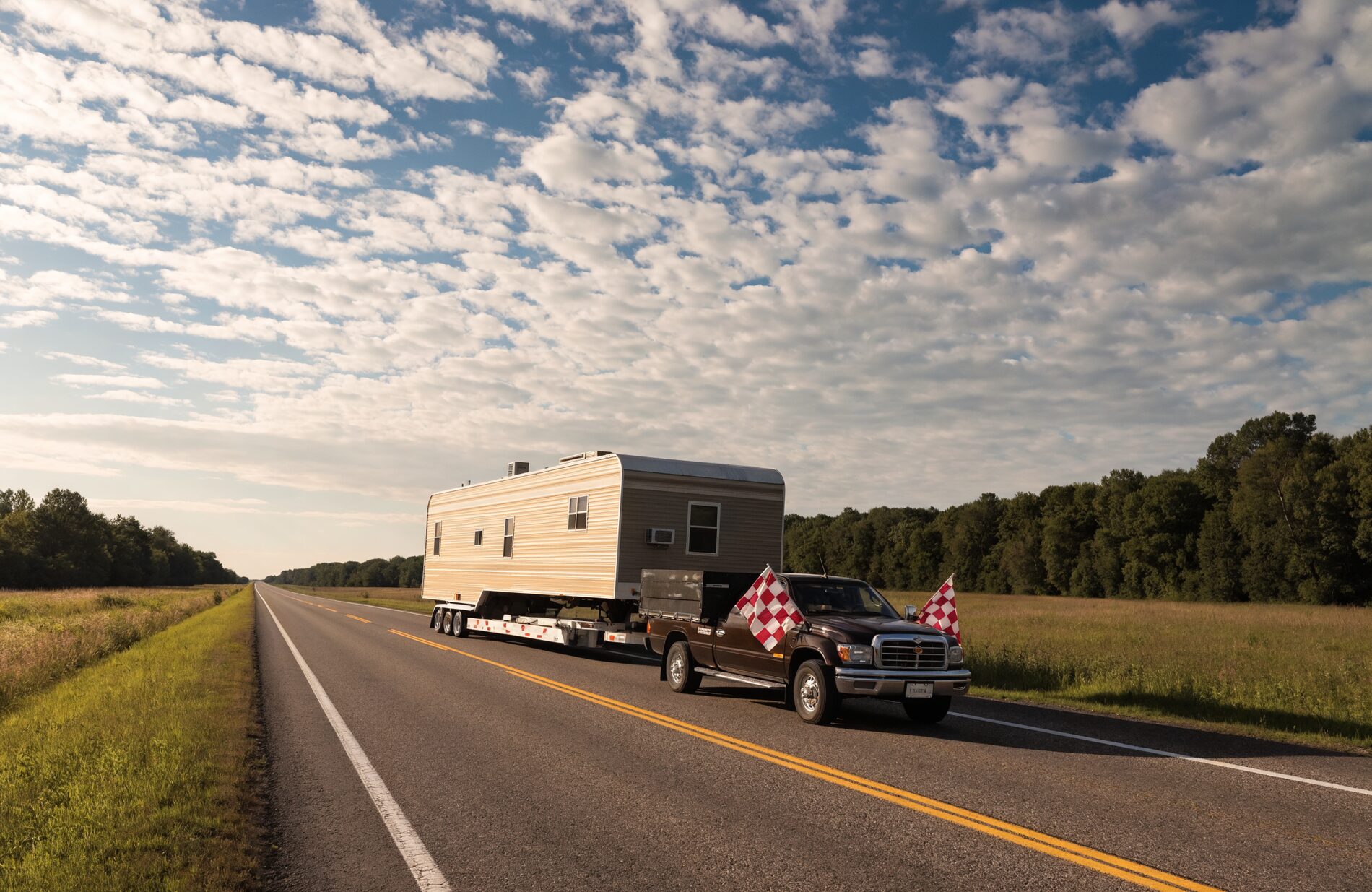
Wide loads move at first light: permitted, flagged, escorted, and slow on purpose. It looks dramatic. Done right, it is the most boring day of the whole story, and boring is exactly what you want.
Every line on an honest haul quote.
No mystery totals. These are the four families of cost in nearly every quoted move, and the reason each exists. If a quote you get elsewhere cannot be broken into these lines, ask why.
Ranges, stated as ranges
Published industry figures put short single-wide transport-only moves in the low thousands and long full-service double-wide moves well into five figures. We show planning ranges with the assumptions visible, and we never dress a guess up as a quote.
The one number that is free
Asking. A quote request costs nothing, obligates nothing, and gets read by a person. If your route is outside what our network can reach today, you will hear that in plain words instead of silence.
Honest about the road, and about ourselves.
Vetted, or not listed
The bar for our network is fixed before anyone joins it: active USDOT registration and insurance, checked by us, not self-declared. No pro reaches your inbox without clearing it.
The width comes first
We ask for the width before the miles because that is how the road prices it. A quote built width-first is a quote that survives contact with the permit office.
Your details stay put
One request, one thread. We do not auction your phone number to call centers, and we do not add you to a drip list for asking a question.
MobileHomeHaul is new, so we do not show customer reviews yet. The cards above describe how we work, not testimonials, and we will never invent one. When real customers choose to leave reviews, you will see them here, unedited.
Four moves, one honest front door.
You bought it, now it has to move
The home is a deal because moving it is the hard part. You need the real number, movability checked, and a transporter who will actually show, before the seller's deadline.
Placing a home on your own acreage
Transport is half your project. The other half is the pad, the utilities, the anchoring, and the county inspector. You need both halves quoted together, not discovered in sequence.
Moving between communities
Park deadlines, park rules on age and condition, and a tight window. You need a crew used to threading a home out of one community and into another without drama.
Relocating, home included
A new job, new county, same home. You need the whole chain, disconnect to final inspection, handled as one job with one accountable quote.
We are not a lead broker.
Sell your request to five call centers
Many "free moving quotes" sites are lead brokers: your phone number is the product, sold to whoever pays, and the calls start in minutes and do not stop. We will not run that model, even though it pays faster than honesty does.
One thread, one honest answer
Your request goes to us, not to an auction. A person reads it, checks it against the coverage we actually have, and replies by email: either a path to a vetted quote or a plain "not yet." Your number rings only if you ask us to call it.
Questions movers get asked every week.
How much does it cost to move a mobile home?
It depends on three numbers: the width of the home, the distance, and how much setup you need on the far end. As broad planning ranges, short transport-only moves of a single-wide are often quoted in the low thousands, while long full-service moves of a double-wide can run well into five figures once permits, escort cars, and setup are included. Anyone who gives you one flat number before asking the width is guessing. Our free Move Cost Estimator shows the math openly, and a written itemized quote is the only number you should ever rely on.
Why does width change the price so much?
Federal rule sets the standard legal load width at 8 feet 6 inches on the main highway network, and nearly every livable mobile home is wider than that. The moment your load crosses the line, it needs an oversize permit from every state on the route, and as width grows, states typically add escort cars, daylight-only travel windows, and route restrictions. A double-wide travels as two separate oversize loads, so much of that cost happens twice. Same road, same miles, several times the price. That is the width ladder, and it is why we ask for the width before anything else.
Can my home be moved at all?
Usually, but not always. Homes built on or after June 15, 1976 carry a HUD certification label and are generally movable if the frame, axles or axle points, and structure are sound. Homes built before that date predate the HUD construction standard, and many parks, lenders, and some state rules restrict where they can be placed. Condition matters too: a home that has sat for decades may need frame, axle, and tire work before any transporter will touch it. Our guide on movability walks through the honest checklist, and your state or local housing authority can confirm the rules that apply to you.
Who handles the permits, me or the mover?
For the transport itself, the transporter typically pulls the oversize permits in each state the route crosses, because the permits attach to the load and the hauling equipment. What often lands on the homeowner is the destination side: the local placement or installation permit, utility connection permits, and any park approvals. A good quote states in writing who is pulling what. Confirm the local requirements with your city or county building department, because they vary widely.
What does setup actually include?
Setup is the half of the move most people underestimate. A setup crew places the home on its pad, blocks and levels it, anchors it against wind per the applicable standards, joins and seals the halves of a multi-section home, reconnects utilities, and sets steps and skirting. Federal installation standards at 24 CFR Part 3285 set the floor for how this work is done, most states license installers, and many require a final inspection before occupancy. Transport without setup leaves you with a home on wheels in a field, which is why we quote both sides of the move.
How long does a move take?
The drive itself is usually the short part. Permits can take a few days to a few weeks depending on the states involved, oversize loads typically move in daylight windows on approved routes, and setup with inspections can add days to weeks on the far end. A realistic full timeline for a permitted, set, and inspected move is measured in weeks, not days. Weather and route restrictions can stretch it. We would rather tell you that now than surprise you later.
What exactly is MobileHomeHaul?
We are building a vetted network of local mobile home transport and setup pros, and this site is the honest front door: real guides, free planning tools, and a quote form that a person actually reads. When you request a quote, we review your route and details, and we connect you with vetted pros as coverage opens in your area. If we cannot cover your route yet, we tell you that plainly instead of selling your phone number to a call-center carousel. That is the whole model.
Three tools that show you the math first.
Move Cost Estimator
Width and distance in, honest planning range out, with every assumption shown on screen.
Moving Readiness Checklist
Title, park notice, utilities, additions: walk the real pre-move list and see what is still open.
Setup Cost Guide
The far end of the move, itemized: blocking, anchors, reconnects, steps, and inspections.
Start with the width. We handle the rest of the questions.
Tell us about the home and the route. A person reads it, checks it against real coverage, and answers honestly, either way.
Get a free haul quoteThe 2-minute quote requestA real person reads and answers every request
And the promise holds: if we can't cover your route yet, we say so, plainly.
Every request is read and answered by a person, not a queue.